
Building a Job Intelligence Platform That Helps People Apply Smarter, Not More
HireSignal is a job intelligence platform that helps designers identify where to apply by tracking company hiring activity and matching roles to their experience. Instead of browsing job boards, users get prioritized opportunities based on hiring signals and CV-based match scoring.
What began as a simple hiring tracker gradually evolved into a job intelligence platform through dozens of design and product iterations. Over several months, I repeatedly redesigned the experience, refined workflows, challenged assumptions, and collaborated with AI-assisted development tools to rapidly prototype and validate new ideas.

My Role on this project
The Problem
For many applicants, this results in:
- Hours spent browsing multiple job boards
- Repeated applications with little visibility into hiring intent
- Difficulty identifying companies with consistent hiring activity
- Poor organization of applications across different platforms
The problem isn’t a lack of jobs—it’s a lack of actionable signals.
Design Challenge: How might we help job seekers spend less time searching and more time applying to opportunities with the highest likelihood of success?
Research
To understand the problem, I reviewed existing job search workflows and analyzed common patterns across designers and knowledge workers.
1. Fragmented Job Search
Job seekers often switch between LinkedIn, company career pages, startup job boards, and niche platforms, making the search process repetitive and difficult to manage.
2. Quantity Over Quality
Most job boards surface the latest listings, but provide little insight into hiring momentum, company growth, or role relevance. As a result, users apply without knowing where they have the strongest opportunity.
3. Disconnected Application Tracking
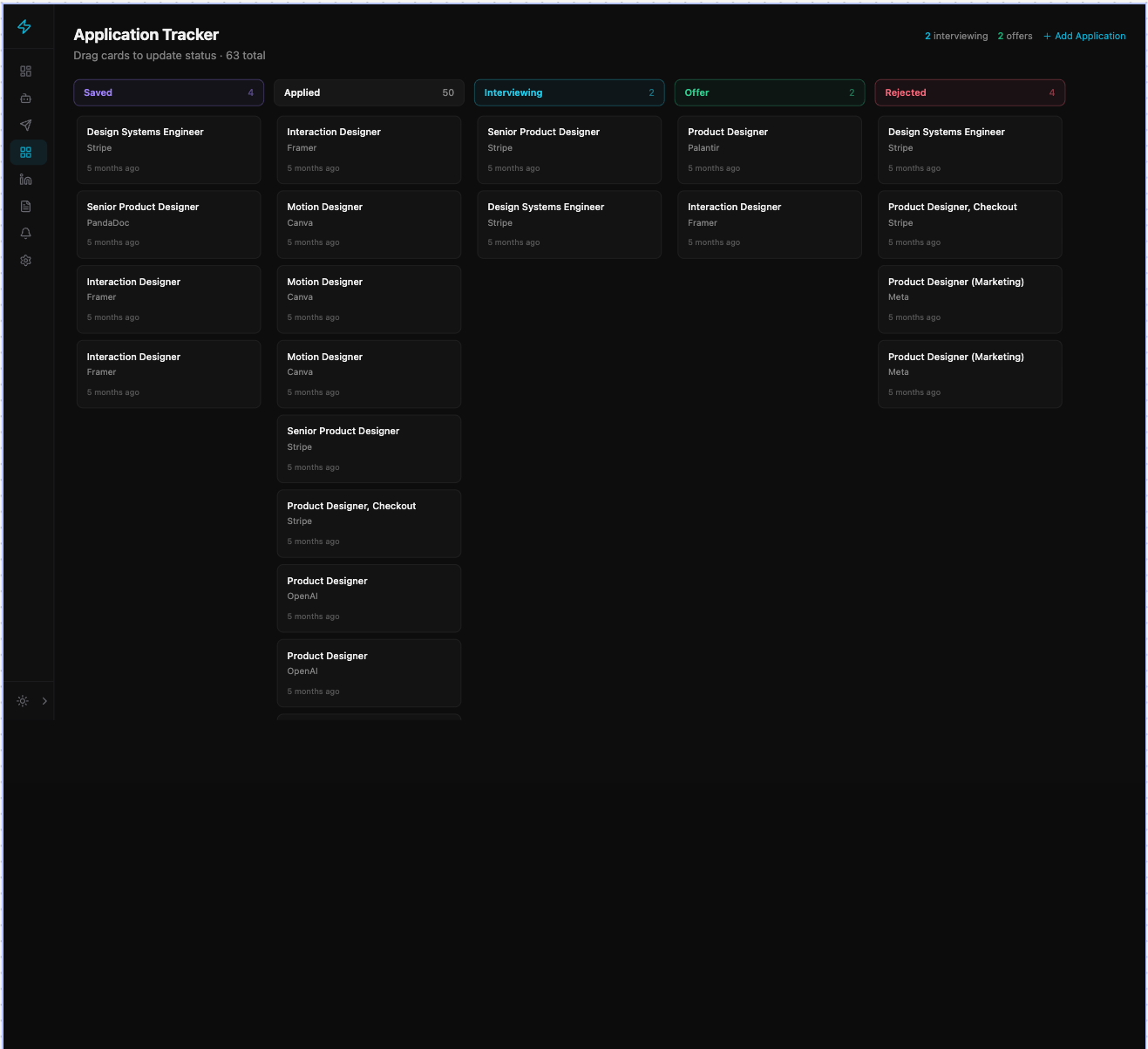
Managing applications often means juggling spreadsheets, notes, and multiple tools. There is no single place to discover jobs, track progress, and manage resumes or portfolios.
4. Generic Job Matching
Many platforms rely on basic keyword matching, producing recommendations that lack context. Users need opportunities ranked by their skills, experience, seniority, and career preferences.
Solution
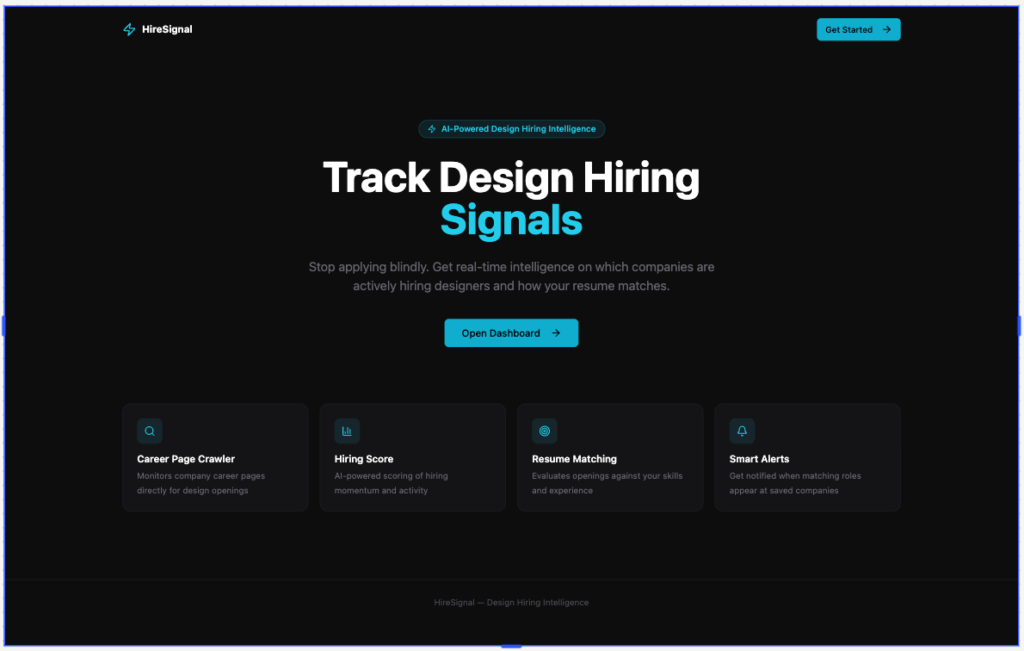
Feature 1 — Hiring Signal Dashboard
Instead of presenting an endless list of vacancies, the dashboard highlights companies based on hiring activity.
Users can immediately understand:
- hiring momentum
- number of active roles
- company activity
- recent updates
This helps prioritize applications instead of treating every listing equally.
Feature 2 — Resume-Based Match Scoring
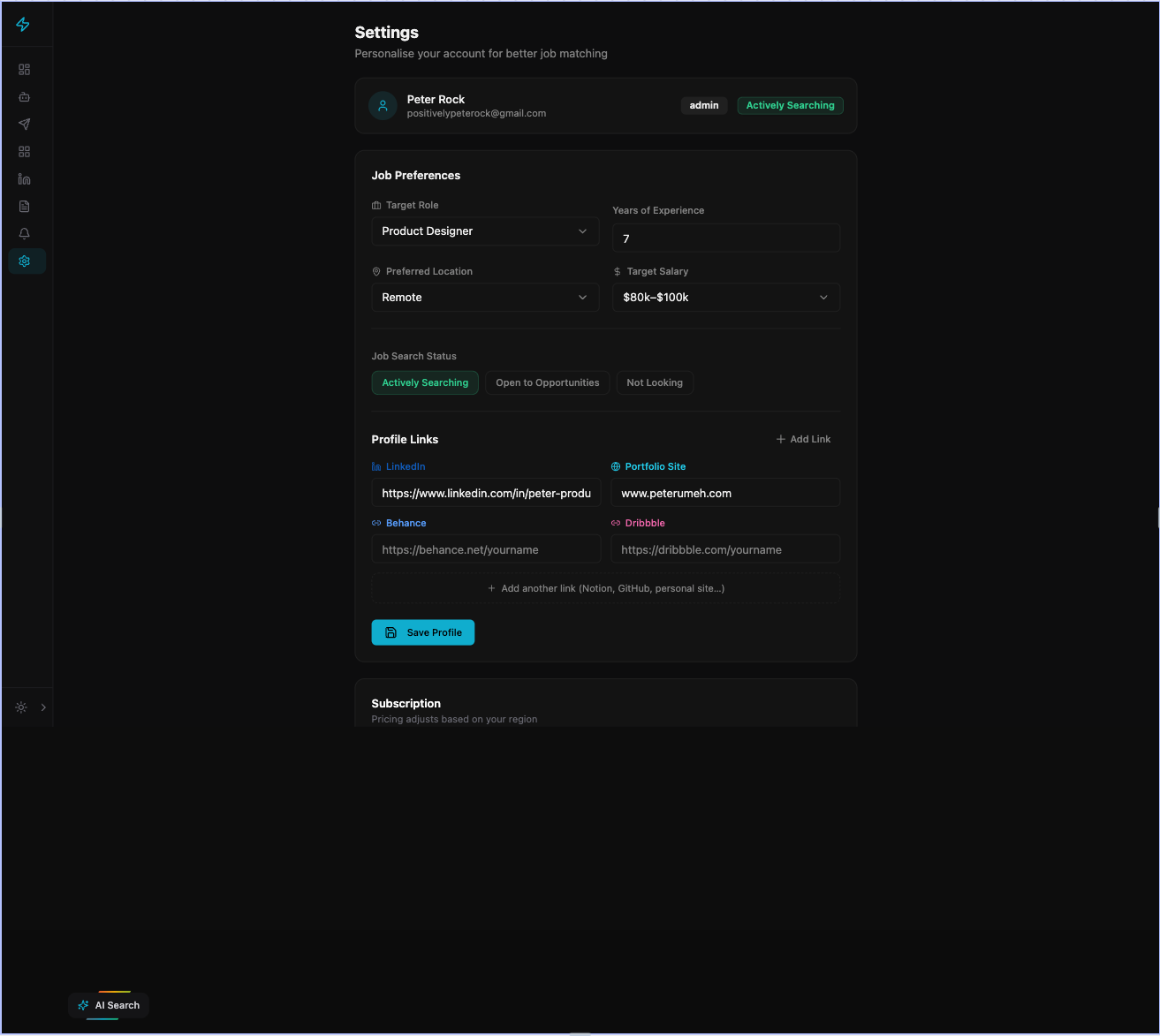
During onboarding, users upload their CV.
HireSignal analyzes:
- skills
- experience
- role history
- seniority
Every job then receives a match score that helps users focus on opportunities aligned with their background.
Instead of scrolling through hundreds of listings, users begin with their strongest matches.

Feature 3 — Smart Apply Assistant
Key Design Decisions
Several decisions significantly improved the product.
Resume-first onboarding
Recommendations remain hidden until users upload a CV, preventing low-quality suggestions and establishing trust.
Empty states
Instead of empty dashboards, every screen provides a clear next action, helping first-time users understand how to progress.
Progressive disclosure
Advanced actions are tucked behind contextual menus or secondary interactions, reducing visual complexity without removing functionality.
AI as an assistant
Rather than replacing the user’s decisions, AI assists with role discovery, cover letters, and resume matching.
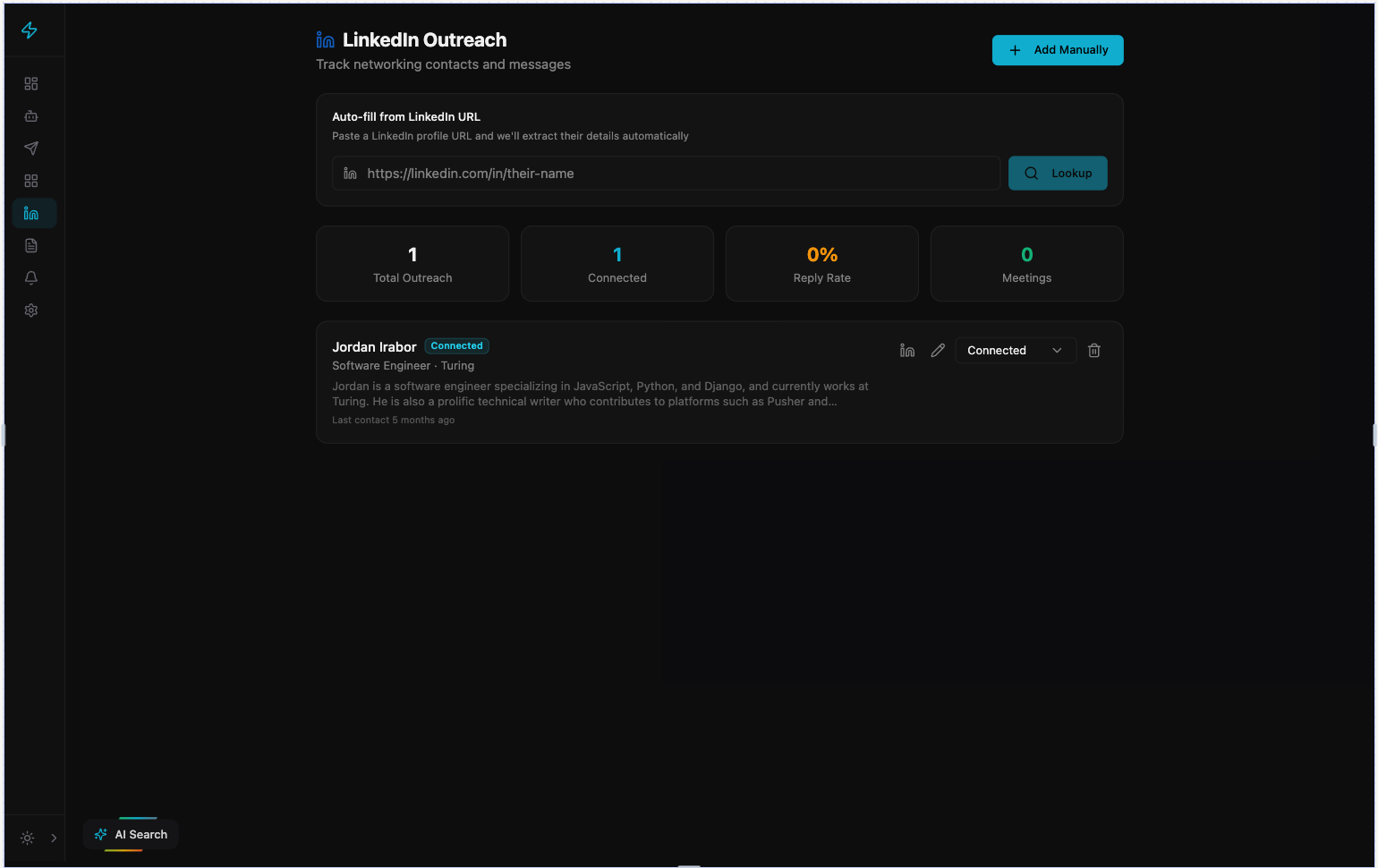

Outcome
The final MVP evolved from a traditional job board into a focused job intelligence platform.
Instead of encouraging users to apply everywhere, HireSignal helps them prioritize opportunities based on hiring activity, resume relevance, and application progress.
The project also demonstrates my ability to:
- Define product strategy
- Iterate rapidly using AI-assisted development
- Translate technical constraints into practical UX decisions
- Simplify complex workflows
- Balance ambitious ideas with realistic implementation
This wasn’t just an interface redesign—it was an exercise in shaping a product through continuous iteration, learning, and refinement.
Up Next
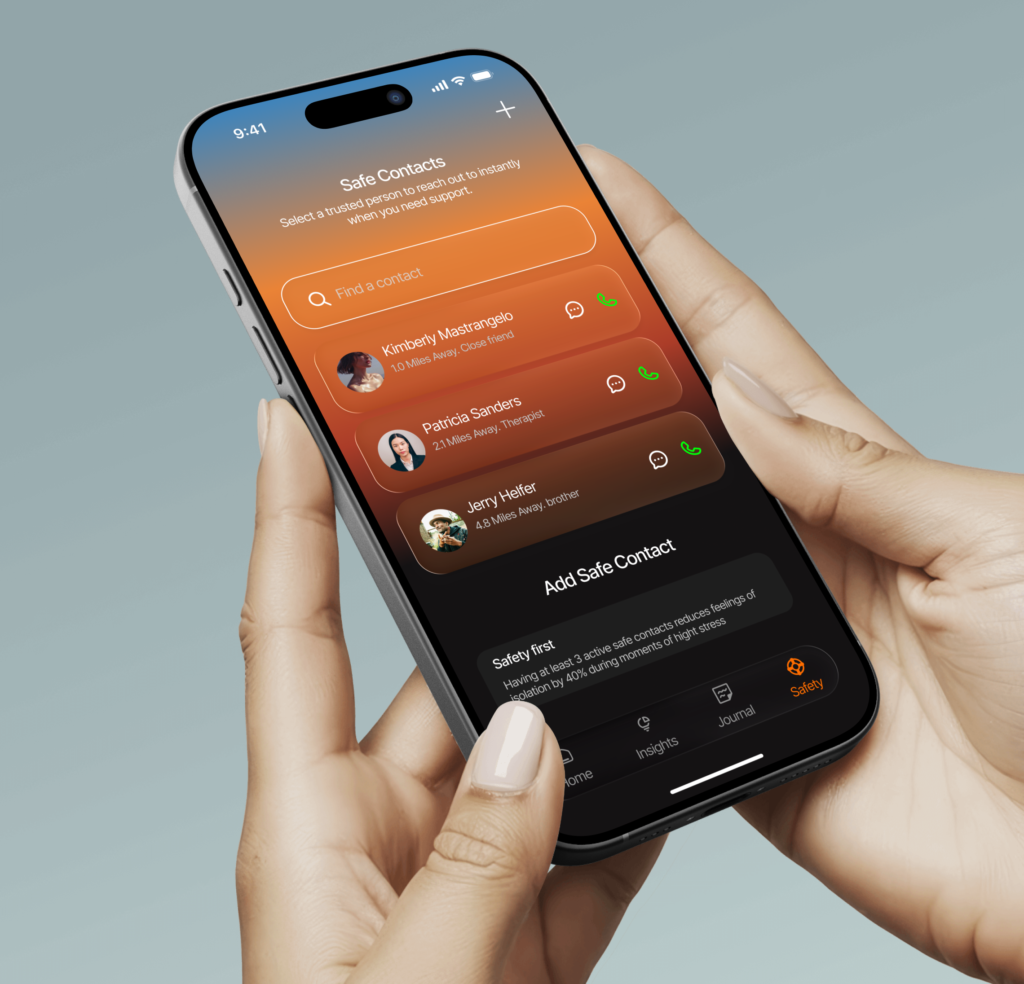
I studied Calm, Headspace, BetterHelp, Woebot, and several smaller mental health tools. The pattern: apps either lean too clinical (therapy platforms that feel like medical software) or too playful (meditation apps that don’t address real crisis moments).

Led the redesign of a cybersecurity learning platform and designed an AI-powered quiz system that transformed passive course consumption into an interactive, feedback-driven learning experience. Worked on a consistent design system for Appsec engineer and redesigned the Webflow website singlehandedly


